
Lawsuit Funding Interest Rates
- May 15, 2026
Lawsuit funding provides plaintiffs access to cash before their case settles. Funders charge fees based on the expected settlement, often expressed as interest rates. Understanding these rates helps plaintiffs plan finances and avoid unexpected costs.
High interest rates can reduce net settlement amounts significantly. Comparing funding options and knowing how rates are calculated ensures plaintiffs make informed decisions and receive funding safely.
What Are Lawsuit Funding Interest Rates?
Interest rates in lawsuit funding determine how much you pay a funder for providing cash before your settlement. These rates differ from traditional loans because they depend on the case value and duration rather than credit history.
How Rates Are Calculated
Funders usually base rates on three main factors:
- Case Strength: Strong cases often receive lower fees and faster approval.
- Settlement Amount: Larger expected settlements may allow smaller effective rates.
- Case Duration: Longer pending cases can increase the total cost due to extended funding periods.
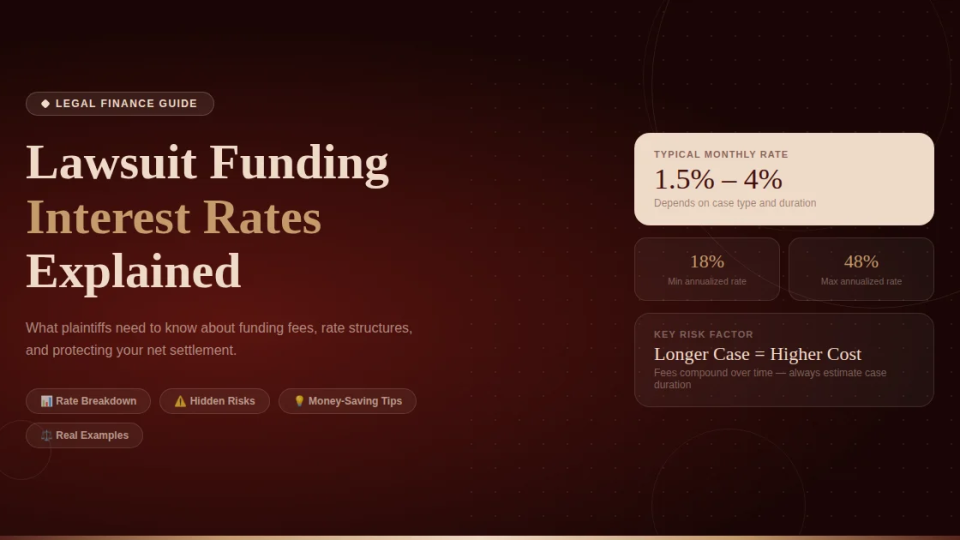
Average rates range between 1.5 and 4 percent per month on the funded amount. Annualized, these rates can reach 18 to 48 percent, depending on case length. Funders charge higher rates for riskier cases.
Types of Funding Fees
Lawsuit funding fees appear in different forms:
Flat Fees
Funders may charge a flat fee regardless of the case duration. Flat fees simplify repayment calculations but can be costly if the case settles quickly.
Monthly Interest
Monthly interest accrues on the funded amount until settlement. For example, $10,000 funded at 3 percent monthly for six months results in $1,800 in fees.
Combined Fees
Some funders use a mix of flat fees and monthly interest, increasing total repayment amounts. Comparing funding agreements helps plaintiffs avoid excessive charges.
Average Rates Across the Industry
Interest rates vary based on the funder, case type, and risk. Here’s a general overview:
Case Type | Average Monthly Rate | Notes |
Personal Injury | 1.5% – 3% | Most common, lower risk |
Workers Compensation | 2% – 3.5% | Cases may take longer |
Medical Malpractice | 3% – 4% | Higher risk, complex cases |
Commercial Claims | 1.8% – 3% | Funders consider case value and client reputation |
These rates show that longer or riskier cases can result in significantly higher total fees. Understanding this helps plaintiffs plan repayment effectively.
Risks of High Interest Rates
High funding rates reduce the amount plaintiffs keep after settlement. A $50,000 funded case with a 3 percent monthly rate over 12 months can cost $18,000 in fees, leaving $32,000 before attorney deductions.
Other risks include:
- Compounding Fees: Some contracts increase interest if settlement delays occur.
- Unclear Contracts: Plaintiffs may unknowingly accept rates that escalate quickly.
- Impact on Settlement Decisions: Funders may pressure plaintiffs to settle early to recover their money.
Tips to Manage Funding Costs
- Compare multiple funders to find lower effective rates.
- Understand the contract fully, including repayment and fees.
- Hire an attorney to review terms and negotiate better rates.
- Estimate case duration to calculate total fees realistically.
Following these steps reduces surprises and helps maximize net recovery.
Real-World Example
Mark, a plaintiff in a car accident case, applied for $20,000 in funding. The funder charged 3 percent monthly interest. His case took eight months to settle. Interest accrued to $4,800, leaving him $15,200 before attorney fees. He realized that comparing funders and reviewing terms could have saved him $1,500 to $2,000.
Final Thoughts
Lawsuit funding interest rates significantly affect the net settlement plaintiffs receive. Rates depend on case strength, expected settlement, and duration. Understanding fee structures, comparing funders, and hiring a lawyer to review contracts ensures financial safety.
Evaluating funding options carefully and considering total costs can save thousands. Plaintiffs who understand interest rates make smarter decisions and secure cash without compromising their legal outcomes.