
Cost of Lawsuit Funding
- May 13, 2026
Lawsuit funding helps plaintiffs cover expenses while waiting for a settlement. Many legal cases take months or years to resolve, and during this time people still have to pay rent, medical bills, and daily expenses. Lawsuit funding provides cash in advance based on the expected settlement, but this money comes at a cost that reduces the final amount you receive.
Many people misunderstand the cost of lawsuit funding because they only look at the cash they receive and not the total repayment amount. The real cost includes interest, service fees, risk charges, and administrative costs. Understanding the full cost structure helps plaintiffs make better financial decisions and avoid losing a large portion of their settlement.
What Is the Cost of Lawsuit Funding?
The cost of lawsuit funding is the total amount deducted from your settlement in exchange for receiving money before your case settles. This cost includes multiple components and not just interest charges.
Funding companies charge higher fees than banks because they take risk. If the plaintiff loses the case, the funding company usually does not get paid. This risk based pricing increases the overall cost of funding compared to traditional loans.
The total cost depends on:
- Funding amount
- Case duration
- Case risk
- Fee structure
- Interest structure
- Settlement timeline
The longer the case takes, the higher the total cost becomes.
Main Components of Lawsuit Funding Cost
Interest Charges
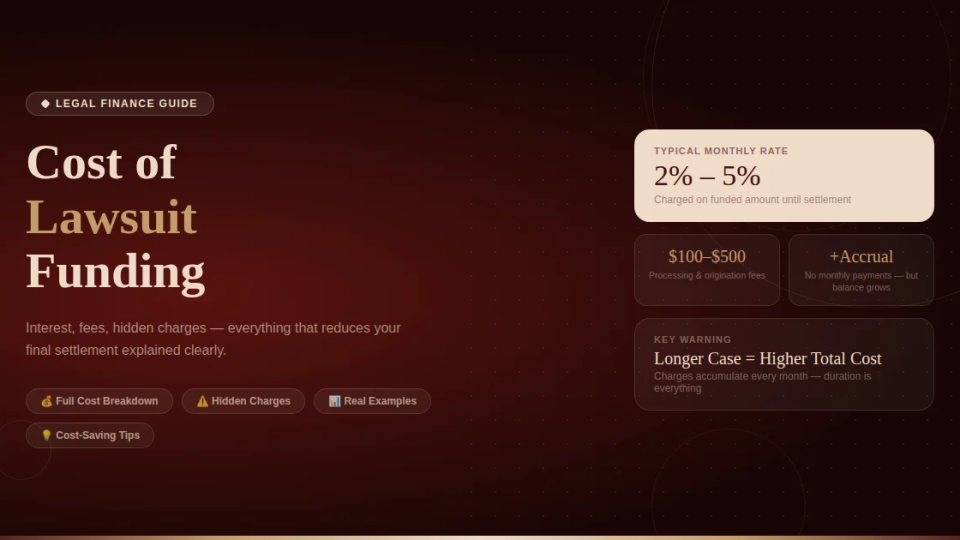
Interest is the highest cost in lawsuit funding. Funding companies usually charge monthly rates instead of annual rates. Monthly rates often range from 2% to 5%, depending on case strength and risk level. Over time, this amounts to a significant deduction from the settlement.
Interest continues to accumulate until the case settles. Plaintiffs do not make monthly payments, but the balance continues to increase each month.
Origination and Processing Fees
Many funding companies charge fees for processing applications and reviewing case documents. These fees may include:
- Application fee
- Processing fee
- Underwriting fee
- Documentation fee
These fees can range from $100 to $500, depending on the company and case complexity.
Administrative Fees
Some funding companies charge administrative or account maintenance fees. These fees cover case monitoring, communication with attorneys, and account management during the lawsuit.
Administrative fees may be charged monthly or added to the total repayment amount.
Risk-Based Pricing
Funding companies evaluate case risk before approving funding. Strong cases with high settlement probability usually receive lower rates, while risky cases receive higher charges. This risk based pricing is one of the main reasons lawsuit funding costs vary between cases.
Total Cost Example
The easiest way to understand the cost of lawsuit funding is through an example.
Example Scenario
- Funding Amount: $10,000
- Monthly Cost Rate: 3%
- Case Duration: 12 Months
- Processing Fees: $300
Total cost after one year may reach around $3,600 in funding charges plus fees, meaning the plaintiff may repay around $13,900 from the settlement.
If the case takes two years instead of one year, the total repayment may increase significantly because charges continue accumulating.
Lawsuit Funding Cost Breakdown Table
Funding Amount | Case Duration | Estimated Total Cost | Total Repayment |
$5,000 | 6 Months | ~$900 | ~$5,900 |
$10,000 | 12 Months | ~$3,900 | ~$13,900 |
$15,000 | 18 Months | ~$6,500 | ~$21,500 |
$20,000 | 24 Months | ~$9,000 | ~$29,000 |
Note: The following examples are estimates for illustrative purposes only. Actual lawsuit funding costs may vary depending on the funding company, case risk, and settlement timeline.
Why Lawsuit Funding Costs Are High
Lawsuit funding companies charge higher costs because they take financial risk. Traditional lenders check credit history and income, but lawsuit funding companies depend only on the case outcome. If the case is lost, they may lose the entire investment.
Several factors increase the cost:
- No credit check
- No monthly payments
- High risk investment
- Long case duration
- Legal and administrative work
- Case monitoring and evaluation
Because of these factors, lawsuit funding costs are usually higher than bank loans or personal loans.
Hidden Costs Plaintiffs Should Know
Some funding agreements include hidden costs that plaintiffs do not notice at first. These hidden costs can significantly reduce the final settlement amount.
Common hidden costs include:
- Compounding charges
- Tiered fee structure
- Early payoff fees
- Minimum repayment clauses
- Multiple funding fees if you take more advances
Always ask the funding company for a repayment schedule before signing the agreement.
How Lawsuit Funding Affects Your Settlement
Many plaintiffs forget that lawsuit funding is repaid from the settlement. This means the final amount they receive will be reduced after paying:
- Attorney fees
- Medical bills
- Lawsuit funding repayment
- Court costs
- Insurance liens
Example settlement distribution:
Settlement Amount | Deduction Type | Amount |
$100,000 | Attorney Fees | $33,000 |
$100,000 | Medical Bills | $15,000 |
$100,000 | Funding Repayment | $18,000 |
$100,000 | Other Costs | $4,000 |
Final Amount to Plaintiff | ~$30,000 |
This example shows how funding cost affects the final amount the plaintiff receives.
Ways to Reduce Lawsuit Funding Cost
Plaintiffs can reduce the cost of lawsuit funding by making smart financial decisions.
Tips to Reduce Cost
- Borrow only what you need
- Compare multiple funding companies
- Ask for simple cost structure
- Avoid multiple funding advances
- Review the contract carefully
- Ask for full repayment schedule
- Try to settle the case faster
- Work with an attorney to negotiate rates
These steps can save thousands of dollars in funding costs.
When Lawsuit Funding Is Worth the Cost
Lawsuit funding may be worth the cost in certain situations:
- You cannot pay rent or bills
- You lost income due to injury
- Insurance company is delaying settlement
- You want to avoid accepting a low settlement offer
- You need financial support during a long lawsuit
Funding allows plaintiffs to wait for a fair settlement instead of settling early due to financial pressure.
Disclaimer: This article is for informational and educational purposes only and does not constitute legal or financial advice. Lawsuit funding costs, rates, and terms vary by company, case type, and state regulations. Always consult your attorney or financial professional before making funding decisions.
Final Thoughts
The cost of lawsuit funding includes interest charges, processing fees, administrative fees, and risk based pricing. The total cost depends mainly on funding amount, case duration, and case risk. Longer cases usually result in higher repayment amounts because charges continue accumulating over time.
Lawsuit funding can provide important financial support during a legal case, but plaintiffs should understand the total cost before accepting funding. Comparing funding companies, borrowing only what is necessary, and reviewing the agreement carefully can help reduce costs and protect the final settlement amount.