
Is Pre-Settlement Funding Worth It?
- May 8, 2026
Legal claims rarely resolve quickly. Court delays, negotiations, and documentation can stretch a case over months or even years. Plaintiffs often face financial pressure during this time because income stops while expenses continue. Pre-settlement funding enters as a fast solution that offers immediate cash based on your expected compensation.
Many people assume this option solves financial stress without consequences. Reality tells a different story. High fees, compounding costs, and reduced settlements make this decision far more complex than it appears.
A clear evaluation of numbers, risks, and real use cases helps determine if pre-settlement funding truly works in your favor.
What Is Pre-Settlement Funding?
Pre-settlement funding provides a cash advance against the expected outcome of a lawsuit. Funding companies review your case strength instead of checking your credit history or employment status. Approval depends on legal merit, not financial background.
Repayment happens only if you win or settle your case. This non recourse structure shifts risk to the funding company, which explains the significantly higher charges attached to these agreements.
Key characteristics include:
- Approval based on case strength, not credit score
- No monthly payments during the case
- Repayment only after a successful settlement
- Higher fees due to increased risk for the lender
Market Size and Industry Growth
The lawsuit funding industry has expanded rapidly over the last decade. Increased litigation timelines and financial stress have pushed more plaintiffs toward alternative funding options.
Recent data highlights this growth:
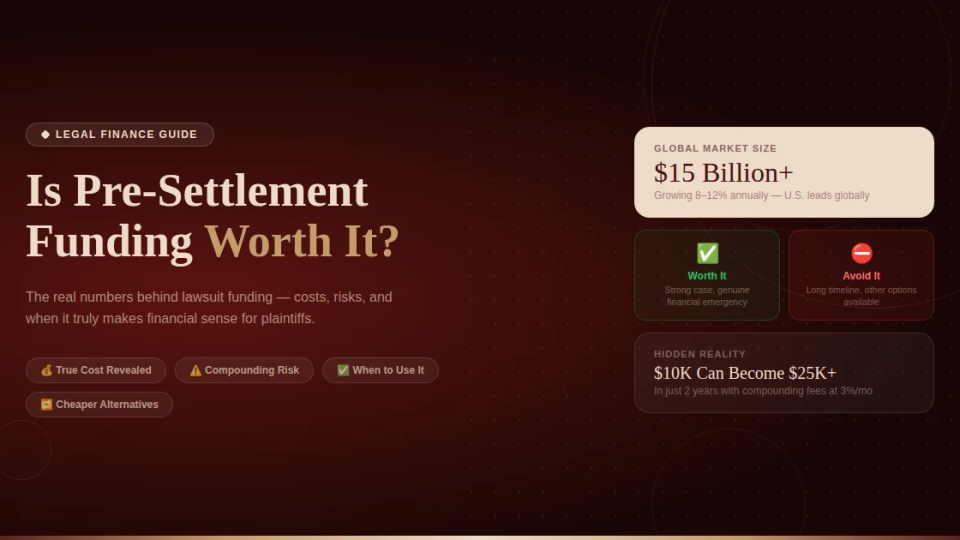
- The global litigation funding market exceeded 15 billion dollars in value
- Industry growth rate stands between 8 percent to 12 percent annually
- The United States leads the market due to high personal injury claims
- Average case duration increased by 20 percent over the past decade, increasing demand for funding
This growth signals rising demand, but it also raises concerns about cost transparency and regulation.
How Pre-Settlement Funding Works
The process moves quickly, but each step involves legal and financial evaluation. Applicants submit basic case details, and their attorney provides supporting documentation. Funding companies assess the probability of success and estimate the potential settlement value.
Funds are released once the applicant accepts the offer. The company collects repayment directly from the final settlement amount, which eliminates monthly repayment pressure but reduces net compensation.
Typical process steps include:
- Application submission with case details
- Attorney verification and document sharing
- Risk assessment and settlement estimation
- Offer approval and fund disbursement
- Repayment deducted after case resolution
The Real Cost Breakdown
Cost remains the most critical factor when evaluating pre-settlement funding. Many borrowers underestimate how quickly fees grow, especially when compounding interest applies over long case durations.
Cost Factor | Typical Range |
Monthly Fee Rate | 2 percent to 4 percent |
Annual Cost | 24 percent to 60 percent or higher |
Compounded Cost Over 2 Years | 80 percent to 200 percent |
Processing Fees | 500 to 1500 dollars |
Early Buyout Option | Rare but possible |
A ten thousand dollar advance can turn into twenty five thousand dollars or more within two years. Some reports show cases where repayment exceeded three times the borrowed amount due to rolling fees and delays.
Benefits That Make It Attractive
Pre-settlement funding continues to attract plaintiffs because it solves immediate financial problems without strict eligibility requirements. Access to quick cash can stabilize daily life during uncertain legal battles.
Financial relief allows individuals to avoid desperate decisions, such as accepting low settlement offers or taking high stress jobs during recovery.
Key benefits include:
- Fast approval and funding within one to two days
- No credit history or income verification required
- Zero repayment obligation if the case fails
- Better negotiation power during settlement discussions
- Reduced financial stress during long legal processes
Risks That Can Reduce Your Settlement
High costs create the most serious risk, but several additional factors can affect your financial outcome. Many plaintiffs fail to calculate the long term impact before accepting funding.
Interest accumulation and delayed case resolution often combine to increase repayment significantly. This situation can leave plaintiffs with minimal remaining compensation.
Major risks include:
- Compounding fees that increase total repayment rapidly
- Significant reduction in final settlement amount
- Limited regulation compared to traditional loans
- Hidden charges in complex agreements
- Financial pressure if the case takes longer than expected
Real World Example
A practical scenario helps illustrate the actual impact of pre-settlement funding. Consider a plaintiff who accepts a ten thousand dollar advance on a personal injury case.
The case takes two years to settle. The agreement includes a monthly compounding fee of three percent. The repayment amount grows significantly over time.
Outcome breakdown:
- Initial advance equals ten thousand dollars
- Total repayment exceeds twenty five thousand dollars
- Attorney fees take around thirty three percent of settlement
- Final amount received drops drastically
Many plaintiffs in similar situations report losing more than half of their settlement due to combined deductions.
When Pre-Settlement Funding Makes Sense
Certain situations justify the use of pre-settlement funding. Financial emergencies often leave plaintiffs with limited options, especially when medical recovery prevents regular income.
Strong legal cases with high expected payouts can absorb funding costs more effectively. Controlled borrowing also reduces financial damage.
You should consider it if:
- Essential expenses cannot be covered through other mean
- Your case shows strong probability of success
- Expected settlement value is significantly high
- Borrowing remains limited to necessary expenses
- Terms and repayment structure are fully understood
When It Is Not Worth It
Pre-settlement funding becomes risky when better financial options exist. Long case timelines increase cost significantly, making the advance far more expensive than expected.
Large borrowing amounts create additional pressure and reduce final compensation further.
Avoid it if:
- Savings or lower cost credit options are available
- Case resolution may take several years
- Borrowing exceeds immediate financial needs
- Agreement terms appear unclear or complex
Alternatives That Cost Less
Lower cost financial options often provide better outcomes. Careful evaluation of available resources can prevent unnecessary financial loss.
Consider these alternatives:
- Personal loans with lower interest rates
- Credit cards with controlled usage
- Medical payment plans negotiated with providers
- Insurance settlements or disability benefits
- Financial support from family or community networks
These options typically preserve a larger portion of your settlement.
Expert Strategies to Reduce Cost
Smart planning can significantly reduce the financial burden of pre-settlement funding. Borrowers who take a strategic approach often retain more of their final compensation.
Effective strategies include:
- Borrow only the minimum required amount
- Choose simple interest agreements over compounding
- Compare multiple funding providers before selecting one
- Request a clear repayment cap in writing
- Involve your attorney in reviewing contract terms
Final Verdict
Pre-settlement funding serves as a financial bridge, not a financial solution. It supports plaintiffs during difficult periods but introduces high costs that can reduce final compensation significantly.
A disciplined and informed approach ensures better outcomes. Careful borrowing, clear understanding of terms, and exploration of alternatives play a crucial role in decision making.
Pre-settlement funding delivers speed and accessibility but comes with substantial financial trade offs. High costs, compounding fees, and reduced settlements create long term impact that cannot be ignored.
A smart decision focuses on necessity and control. Use this option only when essential and limit borrowing to protect your final settlement.