
How Pre-Settlement Funding Works
- May 20, 2026
Legal cases often take a long time to finish. Courts follow procedures, and negotiations also require time. During this period, many plaintiffs face financial pressure. Medical bills, rent, and daily expenses continue even when income stops.
Pre-settlement funding helps in this situation. It provides financial support while a lawsuit remains active. This funding allows plaintiffs to manage their expenses without rushing into a low settlement.
Understanding how this process works helps plaintiffs make better financial decisions.
What Is Pre-Settlement Funding?
Pre-settlement funding provides money to a plaintiff during an ongoing lawsuit. A funding company reviews the legal claim before approving the request. The decision mainly depends on the strength of the case.
Funding companies study legal factors such as liability, damages, and expected settlement value. These elements help them estimate the potential outcome of the case.
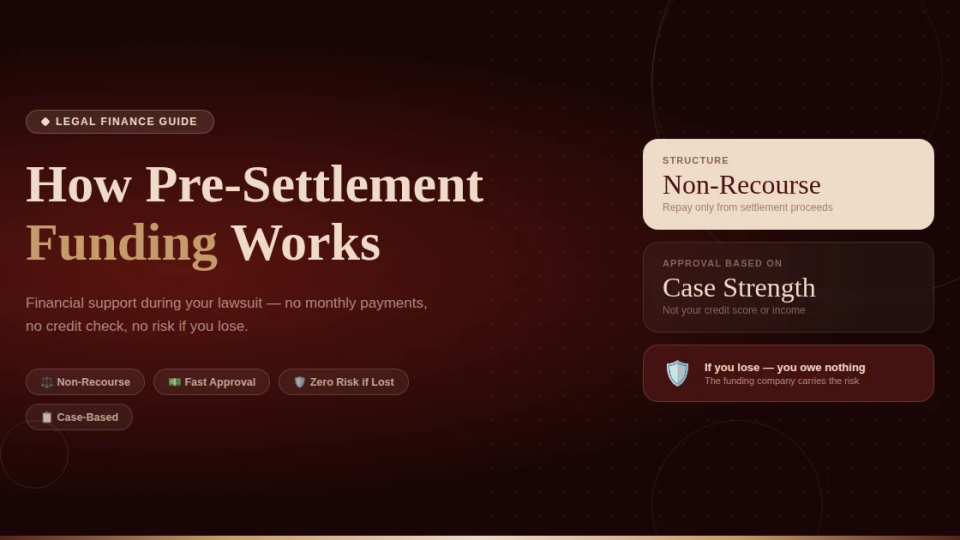
Pre-settlement funding follows a non-recourse structure. This legal structure means repayment depends on the outcome of the case. The plaintiff usually repays the advance only after a successful settlement.
This structure protects plaintiffs from financial risk during litigation.
Why Plaintiffs Use Pre-Settlement Funding
A personal injury lawsuit can take months or even years. Court schedules, negotiations, and legal procedures often delay the final resolution. During this time, plaintiffs may struggle to cover their basic expenses.
Lost wages and medical treatment often increase financial stress. Some plaintiffs also need time away from work while recovering from injuries.
Pre-settlement funding helps plaintiffs maintain financial stability during litigation.
Common reasons include:
- Medical treatment and rehabilitation costs
- Monthly rent or mortgage payments
- Household bills and utilities
- Transportation expenses
- Lost wages during recovery
Financial support allows plaintiffs to focus on recovery and legal proceedings instead of immediate financial pressure.
Step-by-Step Process of Pre-Settlement Funding
The funding process follows a structured evaluation system. Funding companies analyze legal risk before approving funds.
1. Application Submission
The process begins with a simple application. The plaintiff provides basic information about the legal claim.
Typical details include the case type, accident information, and attorney contact details. Most applications require only a few minutes to complete.
Some funding companies also ask about the stage of litigation. Early case information helps evaluators start the review process quickly.
2. Case Review
The funding company contacts the plaintiff’s attorney after receiving the application. The legal team reviews case documents and supporting evidence.
Case evaluation usually includes:
- Liability assessment
- Medical documentation review
- Insurance coverage analysis
- Estimated settlement value
Funding companies rely heavily on attorney cooperation during this stage. Legal documentation helps them understand the risks involved.
Strong evidence often increases the chance of approval.
3. Funding Approval
The company decides eligibility after completing the evaluation. Approved applicants receive a funding offer that explains the financial terms.
The agreement usually includes:
- Funding amount
- Service fees or funding charges
- Repayment conditions
- Case-related limitations
Plaintiffs should read these details carefully before signing the agreement. Attorneys often review the document to confirm the legal structure.
Clear communication helps avoid confusion later.
4. Funds Disbursement
The company releases funds after agreement approval. Many companies transfer the money within one or two business days.
The plaintiff receives the money directly. The attorney usually confirms the funding agreement before the transfer occurs.
This step completes the funding transaction and provides immediate financial relief.
5. Repayment After Settlement
Repayment occurs after the legal case reaches a settlement or court verdict. The funding company collects repayment from the settlement proceeds.
The attorney usually distributes the settlement funds. The funding amount and fees are deducted during this stage.
Many agreements do not require repayment if the plaintiff loses the case. This risk structure explains why funding companies review cases carefully.
Overview of the Funding Process
The following table explains the main stages of pre-settlement funding.
Stage | Main Activity | Purpose |
Application | Plaintiff submits case information | Start the funding review |
Case Review | Company evaluates legal documents | Assess case strength |
Approval | Funding terms presented | Offer financial support |
Disbursement | Money transferred to plaintiff | Provide immediate relief |
Repayment | Payment taken from settlement | Complete the agreement |
This structured process keeps the transaction transparent for both the plaintiff and the funding company.
Cases That Often Qualify for Funding
Funding companies prefer cases that show strong evidence and measurable damages. Legal documentation and attorney support improve approval chances.
Common qualifying cases include:
- Personal injury claims
- Car accident cases
- Truck accident lawsuits
- Workplace injury claims
- Medical malpractice cases
- Product liability lawsuits
Clear liability and strong legal evidence usually increase the possibility of approval.
Funding companies also examine insurance coverage during the review process. Insurance policies often determine the potential settlement value.
Benefits of Pre-Settlement Funding
Pre-settlement funding offers several practical advantages for plaintiffs during litigation.
Financial Stability
Funding helps plaintiffs manage daily expenses during the legal process. Stable finances reduce stress during recovery.
Better Settlement Negotiation
Financial support removes pressure to accept low settlement offers. Plaintiffs and attorneys gain more time to negotiate fair compensation.
No Monthly Payments
Traditional loans require regular payments. Pre-settlement funding usually requires repayment only after settlement.
Fast Access to Cash
Many funding companies process applications quickly. Approved plaintiffs often receive funds within a short period.
Important Factors to Consider
Plaintiffs should review the funding agreement carefully before accepting the offer. Clear understanding of the terms helps prevent future issues.
Key points to evaluate include:
- Total repayment amount
- Service fees and charges
- Funding limits
- Transparency of the agreement
- Attorney involvement in the process
A careful review ensures responsible financial decisions.
Plaintiffs should also avoid requesting excessive funding. Large advances may reduce the final settlement amount received after the case ends.
Balanced funding helps maintain financial control during litigation.
Pre-Settlement Funding vs Traditional Loans
Pre-settlement funding works differently from standard lending options.
Feature | Pre-Settlement Funding | Traditional Loan |
Approval Basis | Strength of legal claim | Credit score and income |
Repayment | From settlement proceeds | Fixed monthly payments |
Risk | Funding company carries risk | Borrower carries risk |
Credit Check | Often not required | Usually required |
This structure makes funding more accessible for plaintiffs facing financial pressure during legal disputes.
When Pre-Settlement Funding Makes Sense
Pre-settlement funding works best when a plaintiff faces genuine financial difficulty during litigation. Long recovery periods and ongoing medical treatment often create such situations.
Funding also helps plaintiffs avoid quick settlements that undervalue their claim. Attorneys can negotiate better outcomes when financial pressure decreases.
Legal experts often recommend using funding only when necessary. Responsible use protects the final compensation amount.
Final Thoughts
Legal disputes often create financial uncertainty. Pre-settlement funding offers temporary financial relief during an active lawsuit.
This funding allows plaintiffs to cover essential expenses while pursuing fair compensation. A clear understanding of the process helps plaintiffs make informed financial decisions.
Careful review of terms and guidance from an attorney ensures the funding supports the legal journey effectively.